Telehealth & Healthcare Scheduling Platform
Patient Module
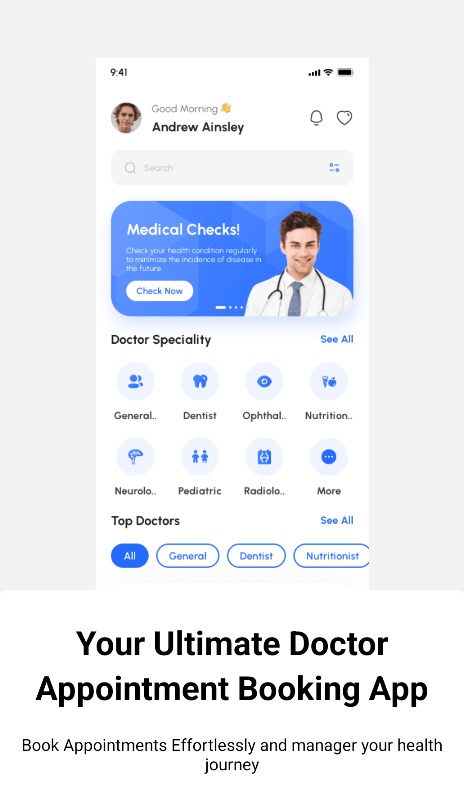
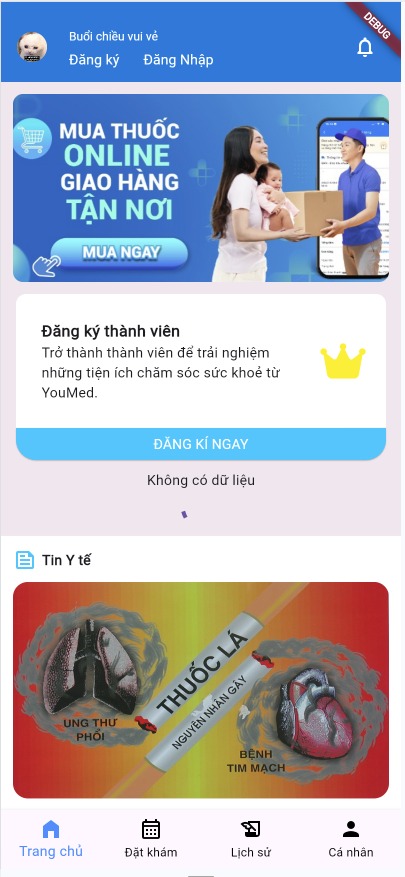
The gateway where users manage their personal health profile, search for specialists, and attend consultations.
-
Smart Search & Filters: Allows patients to search for doctors or healthcare facilities by specialty, symptoms, geographic location, pricing, or available time slots.
-
Flexible Booking Modes:
-
In-Clinic Appointment: Book a physical visit with exact time slots to eliminate traditional waiting room congestion.
-
Telehealth: Book an online virtual consultation via high-definition Video or Voice Call.
-
-
Personal Health Record (PHR): Enables patients to digitize and store their medical history, blood type, drug allergies, height, weight, and upload prior laboratory results or old prescriptions ahead of their consultation.
-
Automated Reminders: Push notifications or SMS alerts sent 30 minutes to 1 hour prior to a scheduled consultation, along with daily pill intake reminders based on the doctor’s e-prescription.
Practitioner & Clinic Module
The operational workspace where physicians manage their schedules, accept cases, and conduct digital diagnoses.
-
Schedule & Slot Management: Allows doctors or clinic administrators to dynamically open, close, or recurringly configure available time slots on a daily or weekly basis.
-
Integrated Consultation Dashboard: During a telehealth session, the doctor operates on a split screen: one side displays the live Video Call with the patient, while the other side exposes the Electronic Medical Record (EMR) for real-time symptom logging and clinical note-taking.
-
e-Prescriptions: Doctors input medication names, dosages, and instructions directly into the system. Once cryptographically signed, the digital prescription is instantly routed to the patient’s account as a QR code or an official PDF file.
-
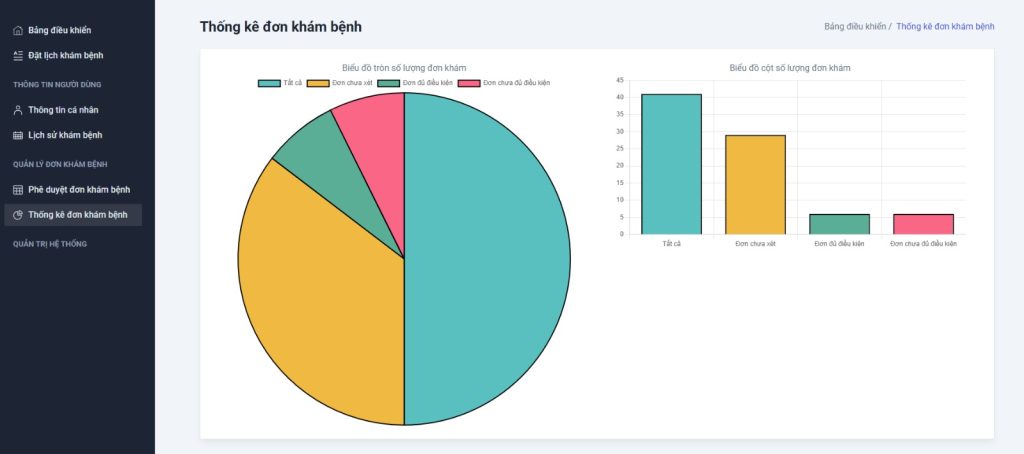
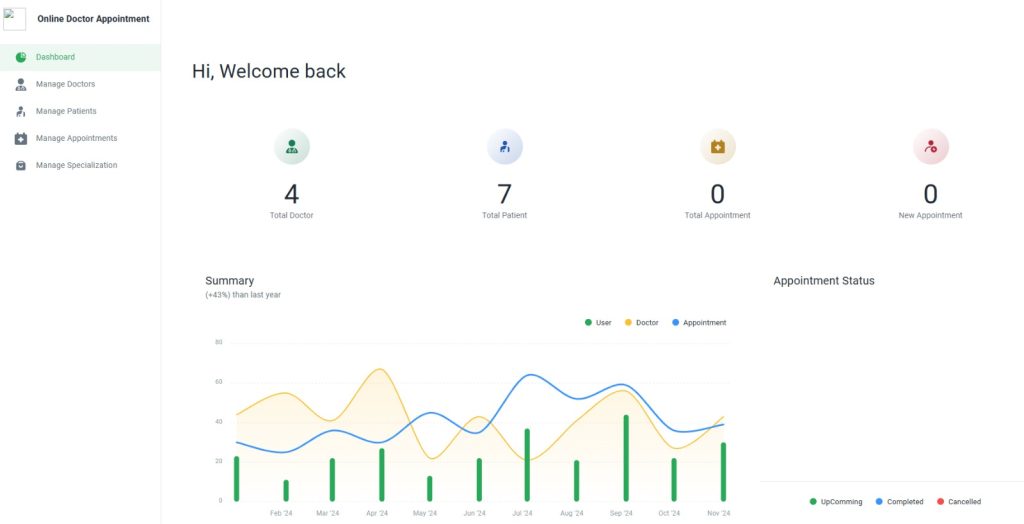
Revenue & Shift Analytics: Provides real-time statistics covering completed appointments, total earnings aggregated by day/week/month, and revenue-sharing payouts with the platform.
Telehealth & Real-time Core Module
The underlying technology engine that dictates the quality and stability of virtual medical consultations.
-
Low-Latency Video Infrastructure (WebRTC): Peer-to-Peer streaming protocols ensure crystal-clear online sessions even under sub-optimal network conditions, dynamically adjusting video resolution to prioritize and maintain uninterrupted audio streams.
-
Virtual Waiting Room: If a patient arrives on time but the doctor is still concluding a prior session, the patient enters a virtual lobby displaying their queue number or an estimated remaining countdown timer until their turn.
-
Real-time File Exchange & Chat: Enables patients to capture and transmit high-resolution photos (e.g., dermatology or ophthalmology conditions) or lab reports directly to the physician during an active video consultation.
Tech Stack: Web app & Mobile Appl | Golang| ReactJS| Flutter | Postgresql


Created Date
June 10, 2026Created By
admin
The self-paced LMS
-
E-Commerce & Payment Gateways:
-
Supports shopping carts, discount coupons, monthly/annual subscription models, or pay-per-course purchasing.
-
Integration with local payment methods (Momo, VNPAY, automated bank transfers) and international processors (Stripe, PayPal).
-
-
Multimedia Learning Player:
-
Supports secure video playback (utilizing HLS/DASH streaming encryption to prevent unauthorized downloads), text-based materials (PDFs, presentation slides), and file attachments (source code, design templates).
-
Auto-save Progress: Automatically saves learning progress down to the exact second. If a user closes the app and opens it later on a different device, they can resume instantly right where they left off.
-
Drip Feed Content: Enforces sequential learning by only unlocking the next lesson after the user completes the previous one or hits a minimum watch-time threshold.
-
-
Diverse Assessment Formats (Quizzes & Assignments): Supports multiple-choice, fill-in-the-blank, drag-and-drop questions, or open-ended practical assignments (uploading code repositories, design assets, etc.).
-
Question Bank & Randomized Tests: Allows instructors to build deep pools of categorized questions. The system can automatically shuffle and extract a designated number of random questions to generate a unique exam paper for each student, severely mitigating cheating.
-
Passing Criteria Configuration: Ability to set specific benchmarks for success (e.g., scoring $80%$ or higher to pass).
-
Time Out & Attempt Limits: Configures dynamic countdown timers per exam (e.g., 45 minutes) and limits the number of retry attempts (e.g., maximum of 3 attempts; if failed, the student must retake the module or wait 24 hours).
-
Dynamic Certificate Generator: Automatically populates the Student’s Name, Course Title, Completion Date, and a Unique Certificate ID into a pre-designed template, exporting it as a high-resolution PDF or image file.
-
Credly API Integration (Automated Badge Issuance):
-
As soon as a learner triggers the “Claim Certificate” event, your backend system fires an API request containing the student’s Full Name, Email, and the predefined Badge Template ID to the Credly Acclaim API.
-
Credly instantly dispatches an automated notification email to the student: “You’ve earned a badge from [Your Platform Name]”. From there, the student can accept the badge and seamlessly share it directly to LinkedIn, Twitter, or embed it into their digital resume.
-
-
Public Verification Portal: A non-authenticated, public web route where employers or third parties can input a student’s
Unique Certificate IDto immediately verify authenticity (returning details like Valid Certificate, issued to John Doe on MM/DD/YYYY).
Tech Stack: Unity

Created Date
June 10, 2026Created By
admin
The lonely Hero – Play to earn HAO coin
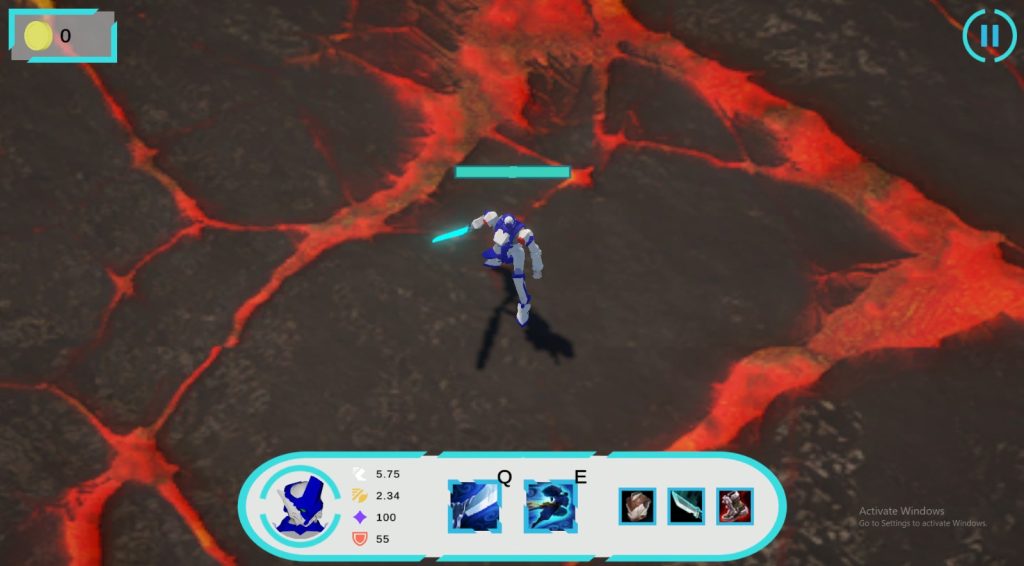
Class & Attribute System: Divide heroes into familiar archetypes (Warrior, Assassin, Mage, Archer). Each hero possesses base stats ($HP$, $ATK$, $DEF$, $CRIT$) alongside an Elemental Affinity system (rock-paper-scissors mechanic) to enhance strategic gameplay.
Rarity Tiers: Grade heroes into distinct tiers (Common, Rare, Epic, Legendary). Higher rarity directly translates to stronger base attributes and significantly higher Coin earning efficiency (Earning Rate).
Level Up & Ascension: Force players to reinvest the Coins they earn in-game to upgrade levels or “ascend” past level caps. This acts as a primary Token Burn mechanism to combat asset inflation.
PvE Mode (Campaign/Dungeon): Players send heroes to clear stage-based monsters or crawl through dungeons.
Rewards: Standard utility Coins (capped daily per account) and equipment upgrade materials.
Stamina/Energy System:Every hero possesses a capped daily energy pool (e.g., 20/20 Energy). Once exhausted, players can still play for fun, but they can no longer earn Coins. This strictly blocks automated 24/7 farming bots from crashing the economy.
In-game Marketplace: A decentralized peer-to-peer ecosystem where players can freely buy, sell, or auction Hero NFTs, weapons, and gear using the native game token. The platform charges a small transaction fee (e.g., 5%) to continuously replenish the game’s ecosystem treasury.
Tech Stack: Unity

Created Date
June 10, 2026Created By
admin
Virtual Cinema Platform
Screening Rooms & Synchronization Module
-
-
Public Cinema (Scheduled Public Screenings): Movies are broadcast at fixed time slots (e.g., 8:00 PM). Users must “enter the theater” on time. If they arrive late, they watch from the current live playback position without the ability to rewind to the beginning (just like a traditional movie theater).
-
Private Watch Party: Allows users to create their own private rooms, schedule a time, and share a link or room code to invite friends and family. The room host holds the exclusive rights to Play, Pause, and Seek (rewind/forward) the video.
-
Hyper-Sync Playback: The system synchronizes the video playback time across all accounts within the same room down to the millisecond level (typically handled via WebSockets). This guarantees that every viewer sees the exact same frame at the exact same moment.
-
Social & Engagement Module
-
Live Chat & Emoji Reactions: A chat panel positioned next to the screen (with a toggle to hide/show). Users can trigger animated emojis (laughing, crying, shocked) that float across the screen during intense or dramatic plot points.
-
Voice/Video Chat Room (For Private Rooms): Within private watch parties, friends can turn on their microphones or cameras (powered by WebRTC) to talk, react, and debate in real time via a small picture-in-picture overlay.
-
Virtual Seat Selection: Upon entering a screening room, users can select a seat from a 2D floor plan. Their avatar will be displayed on that specific seat, allowing them to see exactly who else is watching the movie with them.
Monetization & Ticketing Module
-
Virtual Ticket Booth: Applied to blockbusters or exclusive film releases. Users purchase digital tickets for a specific showtime. The ticket comes with a QR code or a countdown timer leading up to the gate opening.
-
Virtual Concession Stand (Gamification): Users can buy virtual items like popcorn, sodas, or gifts to “send” to the room host, share with friends in the room, or exchange for exclusive perks (e.g., premium stickers in the live chat).
-
Subscription Models: Alongside pay-per-view ticketing, the platform can offer monthly membership tiers providing unlimited access to a catalog of standard titles.
UI/UX & Immersive Experience Module
-
Theater Mode: Once the movie begins, the surrounding interface automatically dims (“dim lights” effect) and all navigation panels hide themselves so users can fully immerse in the screen.
-
Multi-Platform Ecosystem: The app must run seamlessly across Mobile (iOS/Android), Web, and critically, Smart TVs (Android TV/Tizen/WebOS) or virtual reality headsets (if expanding into VR) to deliver the optimal big-screen experience.
-
Adaptive Streaming: Automatically scales video quality (from 360p up to 4K) based on each user’s network bandwidth. This prevents a single user with a weak connection from dragging down or lagging the synchronization of the entire screening room.
Tech Stack: Web app | Golang| .Net | SQLServer


Created Date
June 10, 2026Created By
admin
Digital News Platform
-
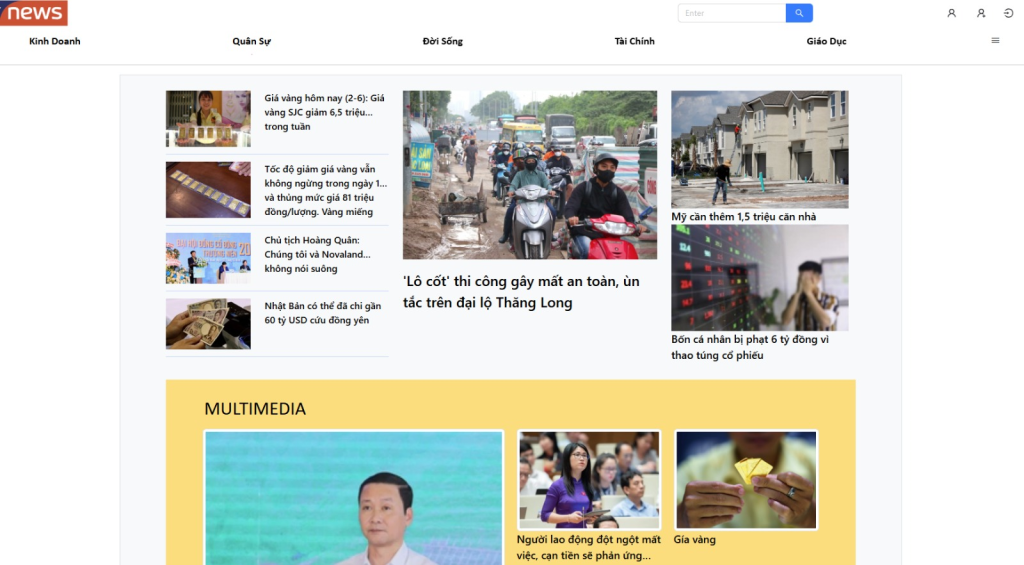
Editorial Calendar: For scheduling and planning content pipelines and upcoming story series.
-
Digital Asset Management (DAM): A centralized repository for managing shared images, videos, graphics, and audio assets.
-
Paywall / Subscription Management: Systems designed to gate premium content and handle reader monetization.
-
Analytics & SEO Tools: Built-in tools for tracking real-time readership metrics and search engine optimization.
-
Multi-channel Publishing Platform
-
Cross-media CMS
Tech Stack: Web app | Golang| React + Vite | Mysql

Created Date
June 10, 2026Created By
admin
Recruitment framework
We provide an End-to-End Recruitment Process
Standardization & Repeatability
The framework provides clear, predictable logic gates for every single role. Every candidate passes through identical, objective decision nodes (e.g., Screening → Interviewing → Feedback → Offer). This ensures consistency, meaning your hiring quality doesn’t fluctuate based on which recruiter or manager is running the search.
Built-in Bias Mitigation
Instead of relying on “gut feeling” or “culture fit” (which often unconsciously translates to hiring people just like ourselves)
Candidate-Centric Communication
The framework maps out standard “touchpoints” to ensure applicants are never left in a hiring black hole. It includes automated yet personalized communication triggers for when a candidate is shortlisted, moving to interviews, or even gracefully rejected. A positive candidate experience protects your employer brand.
Collaborative Decision Loops
Hiring is treated as a team sport, not an HR-only task. The framework explicitly defines the hand-offs and responsibilities between the Recruiter (who sources and screens) and the Hiring Manager (who owns the technical assessment and final decision). Notice in the process chart how feedback loops occur immediately after interviews to keep the momentum going.
Data & Metric Tracking
A modern framework is entirely measurable. It tracks bottlenecks mathematically—if your “Time-to-Hire” is stalling out at the interview stage, the framework’s data will highlight that specific delay so you can fix it.
Scalability & Flexibility
While the core logic remains uniform, the framework can scale up for high-volume hiring (like retail or customer support) or pivot into deep, highly tailored sourcing sprints for niche executive or technical talent.
Tech Stack: Web app | Java | React + Vite | Mysql